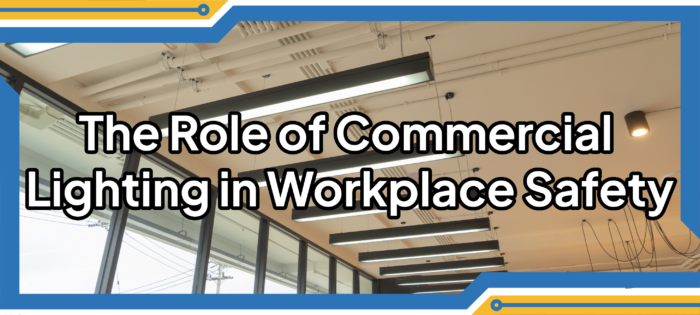
The Role of Commercial Lighting in Workplace Safety is more significant than many business owners realize, affecting everything from everyday visibility to emergency response. In offices, warehouses, retail spaces, and industrial facilities, the way a building is lit can directly influence accident rates, productivity, and overall employee well-being. Thoughtful lighting design, correct fixture placement, and regular maintenance all work together to create a safer, more functional work environment.
Commercial Lighting in Workplace Safety for Modern Work Environments
Commercial lighting is not just about making a space bright enough to see; it is about providing the right kind of light in the right location for the tasks being performed. Proper illumination reduces eye strain, trip hazards, and misjudgment of distances, while poor lighting can contribute to slips, falls, and operational mistakes. When lighting is planned with safety in mind, businesses benefit from fewer incidents, better morale, and smoother day-to-day operations.
Table of Contents
- Why Commercial Lighting Matters for Workplace Safety
- Lighting Standards and Regulations for Commercial Workplaces
- Task Ambient and Emergency Lighting in Safety Planning
- High Risk Areas That Require Special Lighting Considerations
- The Impact of Light Quality and Color on Safety
- Commercial Lighting Design Best Practices for Safety
- Maintenance and Inspection of Commercial Lighting Systems
- Balancing Energy Efficiency and Safety in Commercial Lighting
- Signs Your Commercial Lighting May Be Creating Safety Risks
- Planning Commercial Lighting Upgrades with Workplace Safety in Mind
Why Commercial Lighting Matters for Workplace Safety
The role of commercial lighting in workplace safety begins with visibility. Employees must be able to clearly see their surroundings, equipment, walkways, and potential hazards in order to move and work safely. Poor visibility increases reaction time and the likelihood of slips, trips, and operational errors. In busy commercial environments where machinery, vehicles, or customer traffic are present, even minor lighting deficiencies can lead to serious incidents.
Lighting also affects human perception and attention. Inadequate or uneven lighting creates shadows, glare, and contrast issues that distort depth perception and obscure obstacles. Over time, these conditions not only increase accident risk but also contribute to fatigue and reduced alertness. Consistent, well-distributed illumination supports safer movement, better judgment, and more predictable work patterns across all areas of a facility.
Lighting Standards and Regulations for Commercial Workplaces
Commercial lighting is governed by a combination of building codes, fire codes, and occupational safety regulations that establish minimum illumination levels for different types of workspaces. These standards exist to ensure that employees have sufficient light to perform tasks safely and that emergency egress paths remain visible during power disruptions. Compliance with lighting regulations is not optional it is a core component of workplace safety law.
Illumination requirements often vary by space type. Warehouses, manufacturing floors, stairwells, offices, storage rooms, and parking structures each have different minimum light output standards. In addition to brightness levels, regulations also address fixture placement, glare control, and the use of backup power for life-safety lighting systems.
Why Lighting Compliance Is Closely Inspected
Lighting systems are routinely reviewed during building inspections, fire marshal visits, and occupational safety audits because of their direct impact on emergency response and injury prevention. Inspectors verify that exit routes remain illuminated, emergency lights activate during outages, and minimum lighting levels are maintained in all required zones. Deficiencies can result in citations, fines, and mandatory corrective upgrades.
Because lighting interacts with both electrical and life-safety systems, compliance failures often affect multiple inspection categories at once. This makes lighting one of the most scrutinized infrastructure systems in any commercial facility.
Task Ambient and Emergency Lighting in Safety Planning
Effective commercial lighting design relies on three primary layers: task lighting, ambient lighting, and emergency lighting. Each serves a different purpose but works together to support safe operations. Task lighting provides focused illumination for specific work activities such as assembly, reading, equipment operation, and food preparation. Without adequate task lighting, employees are forced to strain their vision or rely on inconsistent light sources.
Ambient lighting establishes overall visibility for the workspace. It allows people to navigate safely, identify coworkers and equipment, and maintain situational awareness. When ambient lighting is too dim, shadows form and visual contrast increases, making it harder to detect movement or hazards at a distance.
Emergency lighting is designed solely for safety during power failures and evacuation scenarios. These systems activate instantly when normal power is lost and illuminate exit paths, stairwells, and critical areas. Their reliability can determine how quickly occupants can evacuate a building during emergencies such as fires or electrical outages.
High Risk Areas That Require Special Lighting Considerations
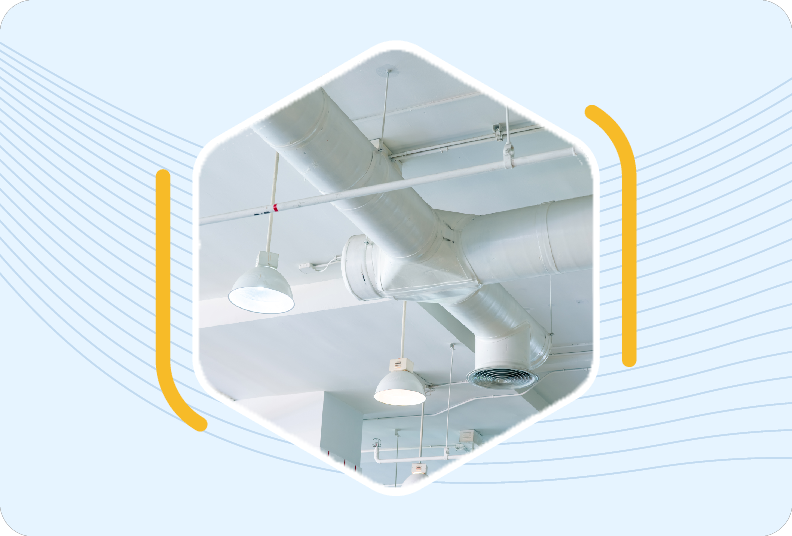
Not all areas within a commercial building carry the same level of safety risk. Certain spaces demand enhanced lighting strategies due to the nature of the work performed or the environmental conditions present. High-risk zones require illumination that exceeds basic visibility standards in order to protect both employees and visitors.
For example, loading docks require bright, uniform lighting to clearly reveal edges, truck positions, and moving equipment. Warehouses with tall shelving need vertical lighting that illuminates both floor-level walkways and upper inventory locations. Manufacturing floors often require shadow-free lighting to prevent misjudgment around rotating machinery and sharp tools.
- Loading docks and shipping areas with frequent vehicle traffic
- Manufacturing zones with moving machinery and automated systems
- Stairwells and interior corridors used for emergency egress
- Parking garages and exterior walkways subject to low visibility
- Storage areas with stacked materials and forklift activity
Lighting in these areas must also withstand environmental stress such as vibration, moisture, temperature fluctuations, and dust. Fixture selection, mounting height, and beam spread all influence how effectively hazards are revealed and how safely people can move through these spaces.
The Impact of Light Quality and Color on Safety
Brightness alone does not define safe lighting. The quality and color characteristics of light strongly influence how clearly people can see details, judge distances, and remain visually comfortable during long shifts. Poor light quality increases eye strain and reduces visual accuracy, which can elevate the risk of mistakes and physical injury.
Color temperature affects alertness and contrast. Cooler light tones often improve visibility in industrial and task-oriented environments, while warmer tones may be better suited for offices and customer-facing spaces. Glare, flicker, and uneven distribution further degrade visual conditions and can create momentary blindness or distraction, especially near reflective surfaces.
Maintaining consistent color rendering across fixtures is also critical. When lighting distorts colors, it becomes harder to identify safety markings, warning labels, and indicator lights on equipment. High-quality commercial lighting enhances both visual comfort and hazard recognition, directly supporting safer workplace behavior.
Commercial Lighting Design Best Practices for Safety
Safe commercial lighting begins at the design stage, long before fixtures are installed. A well-designed lighting plan accounts for ceiling height, surface reflectivity, task demands, and pedestrian traffic patterns. Uniform light distribution is one of the most important design principles for preventing visual blind spots and sharp contrast zones, both of which contribute to accidents.
Layered lighting is a best practice across nearly all commercial environments. By combining ambient lighting for general visibility with task lighting for detailed work and emergency lighting for evacuation scenarios, facilities create redundancy that enhances safety. Proper spacing of fixtures prevents dark pockets while also reducing the intensity of individual glare points that strain vision.
Lighting design must also consider view angles and reflective surfaces. Poorly positioned fixtures can create glare off polished floors, machinery housings, monitors, and glass partitions. These reflections interfere with depth perception and temporarily obscure hazards. Thoughtful orientation and shielding of fixtures plays a crucial role in eliminating these risks.
Maintenance and Inspection of Commercial Lighting Systems
Even the best-designed lighting system will fail to protect workers if it is not properly maintained. Burned-out lamps, failing drivers, damaged lenses, and loose fixtures gradually reduce effective illumination without always triggering immediate notice. Lighting degradation is often subtle, making routine inspection essential for sustained workplace safety.
Dust accumulation on fixtures and lenses can significantly reduce light output over time. In industrial and warehouse settings, airborne particulates, grease, and moisture accelerate this decline. Regular cleaning restores both brightness and beam distribution, ensuring that light reaches working surfaces as intended.
Electrical components also degrade with age. Ballasts, drivers, and internal wiring are subject to heat stress and vibration. Without periodic inspection, these components may fail unpredictably, creating sudden dark zones or intermittent flicker that distracts workers and increases accident risk.
How Lighting Failures Create Immediate Safety Hazards
Sudden lighting failure in stairwells, production floors, or loading docks instantly elevates the risk of falls, collisions, and equipment damage. Intermittent flicker is especially dangerous because it disrupts visual processing and depth perception without fully eliminating visibility. These conditions often precede complete fixture failure, making early detection a key safety strategy.
Documented inspection schedules, lamp replacement intervals, and emergency lighting tests help ensure that lighting systems remain fully operational under both normal and emergency conditions.
Balancing Energy Efficiency and Safety in Commercial Lighting
Energy Efficiency has become a major focus in modern commercial lighting, driven by rising utility costs and sustainability goals. While efficiency is important, lighting systems must never sacrifice safety to achieve lower energy consumption. Over-dimming, excessive sensor delays, and aggressive load-shedding strategies can inadvertently introduce hazardous visibility conditions.
LED technology has significantly improved the balance between efficiency and safety by delivering higher lumen output with lower heat generation and longer service life. However, improper fixture selection or poor control programming can still reduce effective illumination. Occupancy sensors, daylight harvesting systems, and dimming controls must be calibrated carefully to ensure that light levels never drop below safe thresholds during active work.
- Use energy-efficient fixtures that still meet minimum illumination standards
- Program occupancy sensors to avoid delayed activation in high-traffic areas
- Ensure emergency lighting remains on dedicated backup power
- Verify that dimming controls never reduce light below safety limits
- Balance utility savings with consistent visual safety
When energy strategies are aligned with safety requirements, businesses achieve both regulatory compliance and long-term operational savings without increasing accident exposure.
Signs Your Commercial Lighting May Be Creating Safety Risks
Many lighting-related safety hazards develop gradually, making them easy to overlook in busy commercial environments. Frequent lamp outages, uneven brightness, shadowed walkways, and persistent glare are among the most common early warning signs that lighting conditions are deteriorating.
Employee complaints often provide critical clues. Reports of eye strain, headaches, difficulty seeing controls, or increased near-miss incidents frequently correlate with lighting deficiencies. When visual discomfort becomes routine, it often signals that illumination levels or light quality no longer support safe task performance.
Other warning signs include delayed response from motion sensors, emergency lights that fail to activate instantly, and exit signs with dim or inconsistent illumination. Each of these issues compromises emergency readiness and should be addressed immediately.
Planning Commercial Lighting Upgrades with Workplace Safety in Mind
Commercial electrical services can help businesses plan lighting upgrades that improve efficiency while significantly enhancing workplace safety.Safety-focused upgrades prioritize visibility, redundancy, and reliability before aesthetics or energy savings. This approach ensures that new systems deliver meaningful risk reduction rather than simply modern appearance.
Upgrade planning begins with a comprehensive lighting assessment that measures current illumination levels, identifies dark zones, evaluates emergency coverage, and reviews compliance with applicable safety standards. This assessment forms the baseline for targeted improvements that address real operational hazards.
Phased upgrades are common in occupied facilities, allowing businesses to maintain operations while gradually improving safety. During these projects, temporary lighting is often deployed to ensure that work zones remain fully illuminated. Proper coordination prevents the creation of new hazards while upgrades are underway.
When safety drives lighting upgrades, the result is a workplace that supports clear visibility, faster emergency response, improved productivity, and lower long-term liability exposure. Lighting becomes not just an infrastructure system, but a foundational element of the organization’s overall safety culture.

John B is the head electrician at Specialty Electric, where he brings over 15 years of dedicated experience to every project he handles. Known for his technical expertise and meticulous attention to detail, John specializes in high-end electrical installations and advanced troubleshooting. His commitment to safety, efficiency, and the latest industry standards makes him a trusted name among clients seeking reliable and innovative electrical solutions.