
Understanding Title 24 Lighting Requirements in California is essential for homeowners, contractors, and business owners who want to stay compliant with state energy codes while creating efficient, sustainable spaces. These standards affect both residential and commercial properties, shaping how lighting is installed, controlled, and maintained across California. By learning the basics, you’ll not only reduce energy costs but also make sure your building meets strict efficiency and safety guidelines that support long-term sustainability.
Title 24 Lighting Requirements in California
California’s Title 24 Building Energy Efficiency Standards were created to cut energy waste and improve building performance. Lighting is one of the largest sources of energy consumption, which is why the state has strict rules about fixtures, controls, and system designs. Whether you are building new construction or upgrading an existing property, Title 24 compliance ensures that lighting systems are safe, effective, and environmentally responsible.
Table of Contents
- What is Title 24
- History and Purpose of Title 24
- Residential Lighting Requirements
- Commercial Lighting Requirements
- Lighting Controls and Automation
- Energy Efficiency Benefits
- Common Compliance Challenges
- Title 24 Inspections and Documentation
- Cost Saving Opportunities
- Future Trends in Lighting Standards
What is Title 24
Title 24 is a section of the California Code of Regulations that focuses on building standards, with a significant portion dedicated to energy efficiency requirements. When people talk about Title 24 in relation to lighting, they’re usually referring to the Energy Efficiency Standards for Residential and Nonresidential Buildings. These rules are updated every few years to ensure California stays on track with its ambitious goals for reducing greenhouse gas emissions, lowering utility costs, and conserving energy resources.
At its core, Title 24 ensures that the way lighting is designed, installed, and controlled meets today’s standards for both efficiency and comfort. This isn’t just about saving money on electric bills—it’s about building smarter environments that benefit communities statewide. The rules also align with California’s larger sustainability initiatives, like moving toward renewable energy and cutting carbon emissions across every sector.
Lighting represents one of the biggest energy costs in both homes and commercial properties, which makes compliance a top priority. By setting strict efficiency rules, California is actively shaping how buildings operate today and how they will evolve in the future.
History and Purpose of Title 24
California introduced Title 24 in the late 1970s, during a period when the state was facing both rising energy costs and environmental concerns. The legislation’s primary purpose has always been clear: reduce unnecessary energy consumption while ensuring that buildings remain safe and functional. Over time, the regulations have grown more detailed, reflecting advances in technology, building practices, and public policy goals.
Each new cycle of updates brings refinements that align with modern needs. For instance, past updates focused heavily on the transition to compact fluorescent bulbs, while more recent revisions emphasize LED technology and advanced control systems. This evolution shows how Title 24 adapts to both innovation and changing consumer behaviors.
Another key purpose of the regulations is to strike a balance between initial costs and long-term savings. While installing compliant systems may seem expensive at first, the energy savings and reduced maintenance costs over time almost always outweigh the upfront investment. In fact, California’s approach has influenced national and even international energy codes, making Title 24 a benchmark standard around the globe.
Residential Lighting Requirements
When it comes to homes, Title 24 is highly specific about what qualifies as compliant lighting. Every part of a house—from the kitchen to the garage—has its own set of rules designed to ensure efficiency and usability. The standards also emphasize proper placement and the inclusion of control systems to reduce unnecessary usage.
Key Residential Lighting Standards
- Kitchens: At least half of all installed wattage must come from high-efficacy lighting, such as LEDs.
- Bathrooms: All fixtures must be high-efficacy or controlled by vacancy sensors.
- Garages, laundry rooms, and utility spaces: Require either high-efficacy fixtures or motion sensors that turn lights off automatically.
- Outdoor lighting: Fixtures must include photocontrols or motion sensors to minimize wasted energy.
These requirements not only encourage homeowners to adopt modern lighting solutions but also help build habits that reduce long-term energy use. Imagine walking into your garage and having lights automatically turn off after you leave—that’s not just convenient, it’s compliant with state law. By setting up rules that are both practical and enforceable, Title 24 makes energy efficiency a natural part of everyday living.
Commercial Lighting Requirements
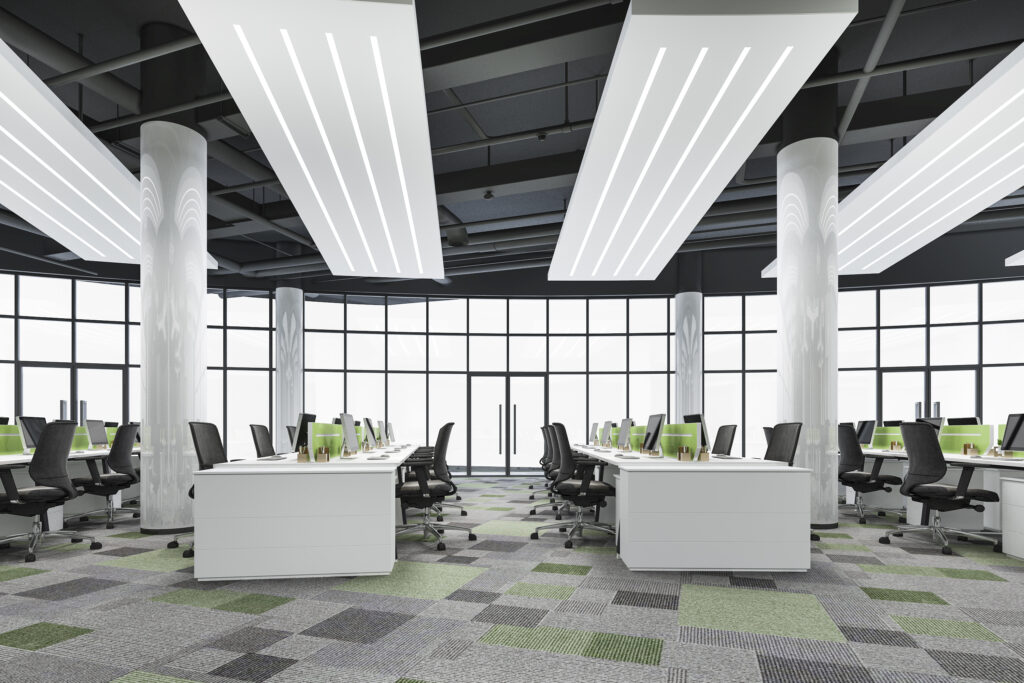
In commercial buildings, lighting plays an even bigger role in energy consumption. Title 24 recognizes this by placing stricter and more detailed requirements on offices, retail spaces, warehouses, and industrial facilities. These standards often include mandatory lighting controls, minimum lighting power densities, and automated shut-off systems that prevent energy waste when spaces are unoccupied.
One unique challenge in commercial settings is balancing employee comfort with energy efficiency. For instance, a retail store needs enough lighting to highlight merchandise, but it also has to avoid exceeding maximum allowable wattage. Title 24 addresses this balance by providing formulas and guidelines that ensure businesses can operate effectively without overusing electricity.
Another important aspect is the inclusion of daylighting controls. In areas where natural light is abundant, commercial properties must install systems that automatically adjust artificial lighting levels. This creates a more natural environment while cutting back on electricity costs. These requirements are especially critical in large facilities like schools, offices, and hospitals, where lights are used for extended periods throughout the day.
Lighting Controls and Automation
Perhaps one of the most significant aspects of Title 24 is its focus on controls and automation. Gone are the days when simply turning a light switch on and off was enough to be considered efficient. Today, compliance often requires advanced systems that adapt to occupancy, daylight, and usage patterns.
Some of the most common Title 24 control requirements include:
Occupancy Sensors: These detect when a room is empty and automatically shut off the lights, saving energy without any extra effort from users.
Vacancy Sensors: Unlike occupancy sensors, these require a manual “on” action but will still turn lights off automatically when no one is present.
Daylight Harvesting: Systems that dim or turn off lights when natural daylight is sufficient to illuminate a space.
In commercial environments, multi-level lighting controls are often mandatory, giving building occupants the ability to adjust brightness based on tasks or preferences. These systems may feel complex at first, but they offer flexibility and significant long-term savings.
For homeowners, controls can be as simple as a vacancy sensor in a bathroom or a smart dimmer in the living room. For businesses, they may include networked control systems integrated with building automation software. Regardless of the scale, the principle remains the same: smarter control equals greater efficiency.
Energy Efficiency Benefits
The most obvious advantage of complying with Title 24 lighting requirements is the significant improvement in energy efficiency. By requiring the use of high-efficacy fixtures, automated controls, and daylighting strategies, these standards ensure that buildings consume less electricity without sacrificing comfort or safety.
For property owners, this translates into lower utility bills. A switch to efficient LED systems, combined with occupancy sensors, can cut lighting energy use by as much as 50%. On a larger scale, these savings extend beyond the building itself—helping reduce strain on California’s power grid and lowering the state’s overall carbon footprint.
There’s also a health and comfort benefit. Modern lighting systems designed to comply with Title 24 often mimic natural light more effectively, creating environments that support productivity, mood, and well-being. This is particularly important in offices, schools, and healthcare facilities, where lighting quality can have a direct impact on performance and outcomes.
Common Compliance Challenges
While Title 24 is designed to be practical, meeting its requirements isn’t always easy. Property owners and contractors often run into a few recurring challenges:
Why Compliance Can Be Difficult
Cost of upgrades: While the long-term savings are real, the initial cost of installing new lighting systems or controls can feel overwhelming for some property owners.
Complexity of rules: The regulations are detailed and change with every update cycle. Without proper planning, it’s easy to overlook a requirement and fail an inspection.
Integration with existing systems: Older buildings can pose unique problems, especially if their wiring or layouts aren’t designed to accommodate modern controls and automation systems.
These challenges don’t make compliance impossible—they simply highlight the importance of proper planning and expert guidance. When upgrades are rushed or piecemealed together, the chances of rework or failed inspections increase dramatically.
Title 24 Inspections and Documentation
A crucial but often overlooked part of Title 24 compliance is the inspection and documentation process. Even if your lighting system appears to meet all the technical requirements, you still need to prove it through proper paperwork and inspections by certified professionals.
During inspections, officials will check lighting fixtures, controls, and installation methods to ensure they match the approved design plans. They’ll also confirm that systems like daylighting controls and occupancy sensors are not only installed but fully functional. Failing this step can lead to costly delays or even prevent occupancy permits from being issued.
Documentation is equally important. Title 24 requires forms and compliance certificates that verify energy standards are met. These documents must be kept on file and are often required when selling or leasing a property. Having them organized and up to date saves time and avoids legal or financial complications later on.
Cost Saving Opportunities
Although compliance may seem like an added expense, there are numerous opportunities for property owners to save money through Title 24. Beyond the natural energy savings, there are state and federal incentives available to offset costs for upgrades.
For instance, many utility companies in California offer rebates for installing qualifying LED fixtures or control systems. On top of that, property owners may be eligible for federal tax deductions under programs designed to encourage energy-efficient building improvements.
It’s also worth considering the maintenance savings. LED fixtures have significantly longer lifespans compared to traditional incandescent or fluorescent bulbs. This means fewer replacements, less downtime, and lower labor costs for repairs. When you combine rebates, tax credits, reduced energy bills, and less frequent maintenance, the long-term savings can be substantial.
- Lower monthly energy bills through reduced consumption
- Access to state and federal rebate programs
- Reduced maintenance and replacement costs with longer-lasting fixtures
- Potential tax incentives for energy-efficient upgrades
Instead of viewing compliance as a burden, many property owners discover that the savings not only balance out the upfront costs but also provide an advantage in property value. Energy-efficient buildings are more attractive to buyers and tenants, making them easier to lease or sell.
Future Trends in Lighting Standards
California’s approach to energy regulation has always been forward-thinking, and Title 24 continues to evolve. Looking ahead, we can expect even greater emphasis on smart technology, renewable energy integration, and adaptive lighting systems that respond in real time to environmental conditions.
One trend already taking shape is the integration of lighting with broader building automation systems. Instead of being controlled as a standalone feature, lighting will increasingly be part of a unified network that also manages HVAC, security, and even renewable energy sources like solar panels. This level of connectivity will allow buildings to optimize performance while giving occupants more control over their environments.
Another trend is the growing role of human-centric lighting, which tailors brightness and color temperature to support circadian rhythms. Future Title 24 updates may push for lighting standards that not only save energy but also promote better health outcomes, particularly in workplaces and schools.
Finally, sustainability will remain the driving force. As California moves closer to its goal of carbon neutrality, lighting standards will continue to tighten. Property owners who stay ahead of these trends by adopting modern, efficient systems today will be better prepared for the requirements of tomorrow.
Ultimately, Title 24 isn’t just about compliance—it’s about future-proofing buildings. By aligning with these standards, property owners are investing in systems that reduce costs, enhance comfort, and support California’s long-term vision of a cleaner, more efficient energy future.

John B is the head electrician at Specialty Electric, where he brings over 15 years of dedicated experience to every project he handles. Known for his technical expertise and meticulous attention to detail, John specializes in high-end electrical installations and advanced troubleshooting. His commitment to safety, efficiency, and the latest industry standards makes him a trusted name among clients seeking reliable and innovative electrical solutions.
One thought on “Title 24 Lighting Requirements in California”
Comments are closed.